


/file/publisher-c1a3f893382d2b2f8a9aa22a654d9c97/2025/05/3b8fc7b70eafc80f8e86ee7a6c785fbc.jpg)

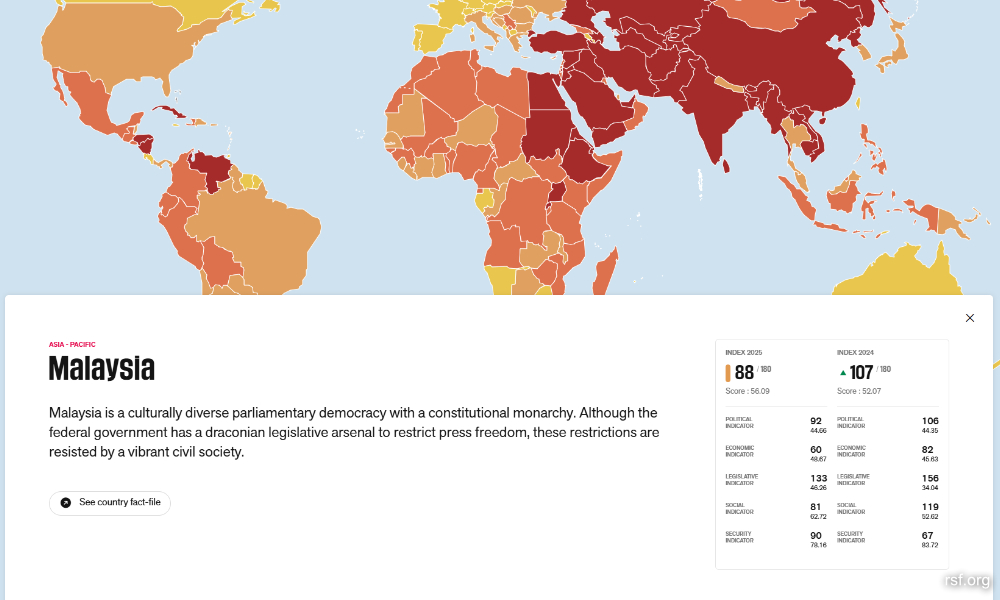
Malaysia rises 19 spots to 88th in press freedom rankings
In the France-based NGO’s report on Malaysia, it noted that local press freedom is constrained by political pressure.
“On the surface, Malaysia seems to have a rich media landscape, but...
Summary
Malaysia rises 19 spots to 88th place in Reporters Without Borders (RSF) 2025’s World Press Freedom rankings.
RSF says local press freedom is constrained by political pressure, which prevents the media from tackling sensitive subjects and criticising the government.
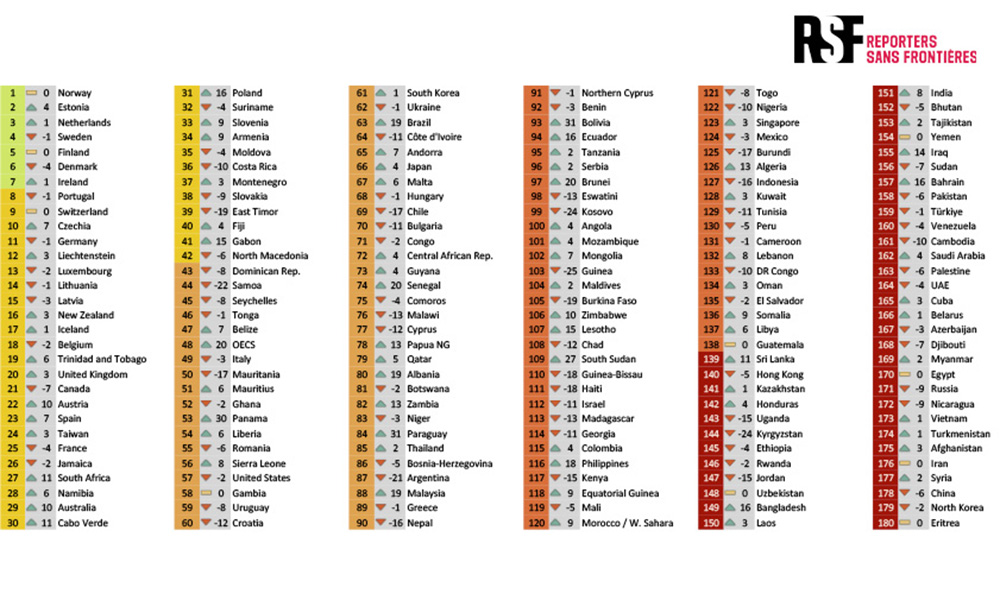
Among Asean countries, Thailand retains its first place at the 85th spot, with Malaysia not far behind.
Malaysia has risen 19 spots to 88th place in Reporters Without Borders (RSF) 2025’s World Press Freedom rankings.
In the France-based NGO’s report on Malaysia, it noted that local press freedom is constrained by political pressure.
“On the surface, Malaysia seems to have a rich media landscape, but the state media - the news agency Bernama and the broadcaster Radio Televisyen Malaysia (RTM) - exert a great deal of influence.
“Many mainstream media outlets are openly partisan, and newsrooms mainly toe the line of whatever government is in power,” RSF said.
It said the situation was better with digital media, naming Malaysiakini as an example of a media site with editorial autonomy.
Last year, Malaysia placed 107th, a fall of 34 rungs from 73rd the previous year.
RSF attributed the drop to the frequency with which news sites critical of the government were being blocked.
Speaking further on political pressure, RSF said this prevents the media from tackling sensitive subjects such as 3R (race, religion, and royalty) issues or criticising the government.
“Any form of commentary or reporting deemed critical of the monarchy can result in prosecution, leading to widespread self-censorship on the matter,” it said.
There is also conflict between the Federal Constitution, which guarantees press freedom, and draconian laws such as the Sedition Act 1948 and the Official Secrets Act 1972, it noted.
“The Printing Presses and Publication Act (PPPA) 1984 gives the government strict control over the licensing of print media outlets, while the Communications and Multimedia Act 1998 is often used to curb what the authorities consider ‘fake news’,” it added.
However, RSF said a plus point includes steps taken to enact a Freedom of Information Act, as well as the formation of a media council.
Persecution of the press
It further noted that Malaysian journalists can become victims of judicial harassment and smear campaigns.
“Recent threats to journalism have included prosecutions involving huge expenses, police searches of media outlet headquarters, disregard for the confidentiality of sources, and expulsions of foreign reporters or whistleblowers,” it added.
On Jan 27, Bukit Aman’s Criminal Investigation Department (CID)’s Special Investigation Unit seized a laptop from Malaysiakini in connection with an investigation into former Umno Youth chief Khairy Jamaluddin.
The laptop was returned on Feb 18.
Last August, the police questioned three Malaysiakini reporters on their sources after a news report on a possible Bukit Aman reshuffle.
RSF also took note of cultural restraints, saying that Malay-language media are subject to more censorship.
“Certain issues related to Islam, which until recently were still taboo, are starting to emerge, such as conversion, child marriages, and apostasy.
“The government has hardened its crackdown against the 3R offences, which has resulted in the arrest and punishment of several people for their online comments,” it said.
Last year marked the first time in three years that Malaysia did not top the rankings for Asean countries, with Thailand taking the 87th spot.
This year, Thailand retained first place, rising two spots to 85th, just slightly ahead of Malaysia.
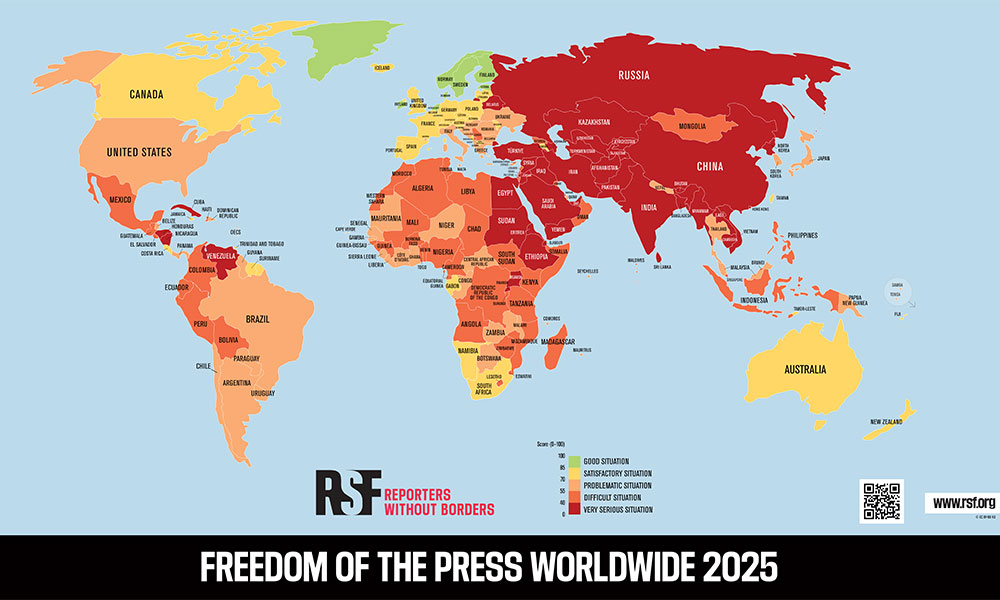
Brunei is the third-highest Asean country at 97th, followed by the Philippines (116), Singapore (123), Indonesia (127), Laos (150), Cambodia (161), Myanmar (169), and Vietnam (173).
In the report on the Asia Pacific, RSF said the region was home to “some of the most advanced states in terms of media control.”
Here, press freedoms are curtailed by authoritarian regimes that control the flow of information through economic methods, it said.
/file/publisher-c1a3f893382d2b2f8a9aa22a654d9c97/2021/03/fdb188ad48ad3e12a96558740caea2ad.jpg)
/file/publisher-c1a3f893382d2b2f8a9aa22a654d9c97/2024/09/6a81554f8bc24f438656aa36a4014611.jpg)
/file/publisher-c1a3f893382d2b2f8a9aa22a654d9c97/2022/06/a474372f81621b36e0ceaad79d51a695.jpg)
/file/publisher-c1a3f893382d2b2f8a9aa22a654d9c97/2022/10/f2aa0ff4c2548ada72e3e5b586667d92.jpg)


Are you sure you want to delete this comment?
This action cannot be undone.